Monday, February 15, 2010

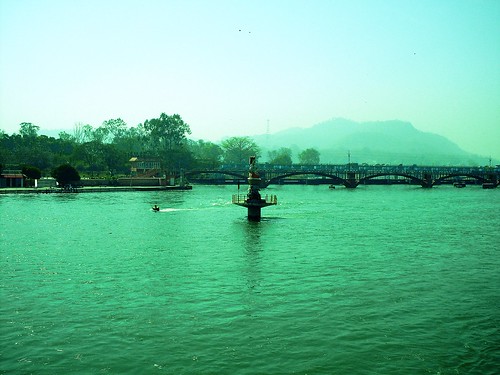
Narmada River flows through Marble Rocks

Photo: Narmada flows through Marble Rocks

CLICK the photo to enlarge it. You can save and use it as a wallpaper (size: 1600x1200)

‘Marble Rocks’ is a gorge on the Narmada River in central India where the river narrows to a width of 10 meters and carves very deep through a large area of white marble, creating a beautiful gorge of about 3 km in length. The Marble Rocks is located near the city of Jabalpur in the Madhya Pradesh state of India. It is a very popular tourist destination.

The River Narmada originates from a small tank called Narmada Kund located on the Amarkantak hill at a height of 1,057 metres (3,467.8 ft) above sea level, in Anuppur District of Madhya Pradesh. The river descends from the Amarkantak hill range at the Kapildhara falls over a cliff and flows through rocks and islands up to the ruined palace of Ramnagar. Between Ramnagar and Mandla (25 km) the course is comparatively straight, and then it flows northeast in a narrow loop towards Jabalpur city.

Near Jabalpur, there is a fall of 9 metre (29.5 ft), called Dhuandhara (the fall of mist). From there it flows for 3 km (1.9 miles) through a deep narrow gorge in the magnesium limestone and basalt rocks called the Marble Rocks which has a width of about 90 metres (295.3 ft) at the top, narrowing down to 18 metres (59.1 ft) at the bottom of the gorge through which the river flows.

Considering its size, Marble Rocks is perhaps the only one place in the world where a river near its origin cuts through very hard marble and meanders around hills and gorges. At some places in the gorge, while you travel through the river in a boat, you can see interesting shapes and figures resembling artistic sculptures on the marble through which the river has cut and made the gorge in the course of centuries of flowing through the marble. Boats are available on hire for visitors at very reasonable rates.

While travelling from Jabalpur to Marble Rocks, visitors can also reach Dhuandhara and Chausath Yogini temple (temple of sixty four yoginis) which are on the way. The ancient temple situated on the top of a small hill houses the idols of sixty four yoginis, all of which are broken due to vandalism by invaders in the past. The broken pieces are kept by the side of the broken idols.

After Marble Rocks, Narmada river enters its first fertile basin and flows westwards over a length of 1,312 km (815.2 mi) before draining through the Gulf of Cambey (Khambat) into the Arabian Sea, 30 km (18.6 miles) west of Bharuch city of Gujarat. It is the largest west-flowing river and the only river in India that flows in a rift valley flowing west between the Satpura and Vindhya ranges, although the Tapti River and Mahi River also flow through rift valleys but between different ranges.

The Narmada River valley is extremely important for paleontological studies. Several dinosaur fossils have been found in the area including Titanosaurus indicus found in 1877 by Richard Lydekker and the recently discovered Rajasaurus narmadensis.

Kanha National Park located in the upper reaches of Narmada, about 18 km (11.2 miles) from Mandla, has several species of wild animals including tigers. Two tributaries of Narmada, Hallon and Banjar, flow through this park. It is one of the best National Parks of Asia which has been described vividly by Rudyard Kipling in his famous ‘Jungle Book’.

Jabalpur is well connected by road, rail and air. Jabalpur Airport, known as Dumna Airport, is about 20 km from the city. Jabalpur is connected by road to most of the Indian cities. Jabalpur is the headquarters of West Central Railways and is connected by trains from Mumbai, New Delhi, Ahmedabad, Bhopal, Kolkata, Vadodara, Patna, Lucknow, Chennai, Bangalore, Nagpur, Pune, Jaipur, Jammu, Hyderabad, Varanasi and Goa.

Saturday, February 13, 2010

The best things to do and see in Toronto

Toronto, often described as a global city, is the largest city and the economic capital of Canada and one of the top financial centres in the world. If you plan a visit, a search in specialized search sites such as Canada 411 on the various attractions will help you to plan your visit, as Toronto has often been compared to New York City as the city that never sleeps north of the border. A few places that one must visit are below.

The 1,815 feet high CN Tower, a prominent landmark of Toronto, held the record of the tallest free-standing land structure in the world for over 30 years. Visitors can reach the top of the tower in an elevator with glass walls to view the panorama of the city and areas beyond.

Another unforgettable experience will be a visit to the Harbourfront & Toronto Islands. Yet another attraction is the Niagara Falls on the Niagara River on the border between the United States and Canada. With more than 6 million cubic feet of water falling every minute it is the most powerful and massive waterfall in North America and the best-known in the world.

Toronto is famous for its events and festivals. At the Exhibition Place on the Toronto lakeshore, every August the Canadian National Exhibition (CNE), the largest and most successful fair of its kind in the entire North America, is considered an important part of the culture of Toronto and Canada itself. The other attractions are the City Hall & Nathan Phillips Square, Casa Loma, Rogers Centre/Skydome, Chinatown, Hockey Hall of Fame, and the St. Lawrence Market.

Also you will not like to miss The Royal Ontario Museum (ROM), the Toronto Zoo, the Art Gallery of Ontario, the Gardiner Museum of Ceramic Art, the Ontario Science Centre, the Textile Museum, and many more such venues.

The Yorkville neighbourhood, one of the most elegant shopping and dining areas, is visited by tourists and even celebrities from all over North America, and the whole world, especially during the Toronto International Film Festival.

For your comfortable stay in Toronto there are some of the finest hotels such as Delta Chelsea Hotel, The Fairmont Royal York, Sheraton Centre Toronto Hotel, The Westin Harbour Castle, Hotel Victoria, and many more to suit every budget. Also there are many nightclubs and restaurants for those who like a memorable nightlife experience. For transport, taxis are aplenty, or one can rely upon the efficient Toronto Public Transportation system.

Jim Corbett

Photo: Jim Corbett with the slain tiger, Bachelor of Powalgarh

Jim Corbett (Edward James Corbett), born on 25 July 1875 in Nainital in the Indian State of Uttarakhand, was a hunter of Irish ancestry. He was a conservationist, naturalist, photographer and writer famous for killing a large number of man-eating tigers and leopards that had killed people in the villages of the Garhwal and Kumaon regions in India.

According to Wikipedia, though Jim Corbett held the rank of colonel in the British Indian Army and worked for the Bengal and North Western Railway, often he was called upon by the government to slay man-eating tigers and leopards. According to records, between 1907 and 1938 Corbett had shot dead man-eaters such as the Champawat Tiger, the Leopard of Rudraprayag, the Tigers of Chowgarh and the Panar Leopard. These man-eating big cats, 19 tigers and 14 leopards, had killed more than 1200 men, women and children.

As he had great admiration for tigers and leopards, he resolved never to shoot them unless they turned man-eaters or posed threats otherwise. However, by his own account, Corbett had shot the wrong animal at least once, and he greatly regretted the incident. Man-eaters are quite capable of stalking the hunter. So Corbett preferred to hunt alone travelling on foot while pursuing dangerous game. At times, Corbett took dangerous personal risks to save the lives of others.

Corbett was deeply concerned about the fate of tigers and their habitat. So he used to lecture to groups of school children about natural heritage, the need to conserve forests and wildlife. Along with F. W. Champion he played a key role in establishing India's first national park, the Hailey National Park in the Kumaon Hills. Later the park was renamed in his honour as Corbett National Park by the Indian government in 1957.

In 1968, one of the five remaining subspecies of tigers, the Indochinese Tiger, which was also called Corbett's tiger, was named after him as Panthera tigris corbetti. The famous books written by Corbett are: Man-eaters of Kumaon, The Man-eating Leopard of Rudraprayag, My India, Jungle Lore, The Temple Tiger and more man-eaters of Kumaon, Man against man-eaters, and Tree Tops.

After 1947, Corbett and his sister Maggie retired to Nyeri, Kenya, where he continued to write and sound alarm about declining numbers of jungle cats and other wildlife. After retirement, Corbett authored the Man-Eaters of Kumaon, Jungle Lore and other books recounting his hunts and experiences. He also advocated for the protection India's wildlife from extinction.

Jim Corbett died of a heart attack after he finished writing his sixth book Tree Tops, and was buried at St. Peter's Anglican Church in Nyeri.

Friday, February 5, 2010

An exciting vacation rental exchange program

Here is an exciting opportunity to owners of second homes who are mostly not making the best use of their second homes. Sometimes simply they are too busy to visit their second homes, or they want to get away to a different location for a better and exciting getaway experience. But many a times they may not find one unless they want to burn a hole in their pockets. The website 3rd Home is filling that void by taking care of your need for such a vacation, a third home for you, anywhere in the world at any time at the click of a mouse button. Simply put, it is a home exchange website that allows you exchange your second home with other luxurious vacation houses so that you can enjoy the exclusive access to some of the best resorts and private destinations in the world.

The goal of 3rd Home is very simple: creating the finest, luxury second home exchange program in the world. In doing so, they also keep up the highest industry standards. What all you need to do is join them and become eligible to use the second homes of other members like you. The availability of such luxurious vacation homes, locations, and the facilities that you get there are listed in the site. Also you are free to check with other members and find out all that you want to know, in addition to the information that you get from their site.

The company is managed by professionals with vast experience in real estate and vacation property management. That means you, your second home, and your need for a luxurious third home will be taken care of in the best possible way. If you are looking for home exchange, you will be excited to know that some of their most popular destinations for vacation rentals by owners are located at such locations as Miami, Florida, Palm Springs, California, and Nantucket Massachusetts. Their members have houses ranging from mansions on Miami Beach and beach villas in Mexico to upscale lofts in France and log homes in Colorado.

That means you get exclusive access to the finest vacation homes and villas at some of the most sought after holiday resorts and private destinations in the world. So, instead of keeping your second homes idle or underutilized, make the best out of them and enjoy the best of vacations without burning a hole in your pockets.

Thursday, January 28, 2010

Kumbh Mela in Haridwar - Video

Haridwar is currently hosting the Purna Kumbha Mela from Makar Sankranti (14th January 2010) to Shakh Purnima Snan (28th April 2010), attracting millions of pilgrims from almost all walks of life, and from around the world. According to Indian astrology, it is celebrated when the planet of Brahaspati (Jupiter) moves into the zodiac sign of Aquarius (Kumbha).

The Purna Kumbh Mela takes place at four locations of India: Prayag (Allahabad, Uttar Pradesh), Haridwar (Uttarakhand), Ujjain (Madhya Pradesh), and Nashik (Maharashtra) after every twelve years, while the Ardh Kumbh Mela is celebrated every six years at Haridwar and Prayag. The Maha Kumbh Mela ('Great' Kumbh Mela) that comes after 12 'Purna Kumbh Melas' (every 144 years) is held at Prayag (Allahabad). Each location’s celebration dates are calculated in advance according to a special combination of zodiacal positions of Sun, Moon and Jupiter.

Kumbh Mela is attended by millions of people on a single day (according to reports, the Maha Kumbh Mela of 2001 was attended by about 60 million people, making it the largest gathering anywhere in the world). The major event of the festival is a ritual bath. Other activities include religious discourses, devotional songs, religious assemblies, etc. Many thousands of holy men and women (monks, saints and sadhus) attend the religious fair. The sadhus are seen clad in saffron cloths as per the requirements of ancient traditions. Some saints called Naga Sanyasis may be seen without any clothes even in severe winter.

After visiting the Kumbh Mela of 1895, Mark Twain wrote, “It is wonderful, the power of a faith like that, that can make multitudes upon multitudes of the old and weak and the young and frail enter without hesitation or complaint upon such incredible journeys and endure the resultant miseries without repining. It is done in love, or it is done in fear; I do not know which it is. No matter what the impulse is, the act born of it is beyond imagination, marvelous to our kind of people, the cold whites.”

The auspicious bathing dates of Haridwar Purna Kumbha Mela are as follows:

  • 14 January 2010 (Thursday) - Makar Sankranti Snan
  • 15 January 2010 (Friday) - Mauni Amavasya and Surya Grahan
  • 20 January 2010 (Wedesday) - Basant Panchmi Snan
  • 30 January 2010 (Saturday) - Magh Purnima Snan
  • 12 February 2010 (Friday) - Maha Shivratri - Pratham Shahi Snan (First Royal Bath)
  • 15 March 2010 (Monday) - Somvati Amavasya - Dvitya Shahi Snan (Second Royal Bath)
  • 16 March 2010 (Tuesday) - Navsatrambh Snan
  • 24 March 2010 (Wednesday) - Ram Navmi Snan
  • 30 March 2010 (Tuesday) - Chaitra Purnima Snan
  • 14 April 2010 (Wednesday) - Baisakhi - Pramukh Shahi Snan (Main Royal Bath)
  • 28 April 2010 (Wednesday) - Shakh Purnima Snan

Saturday, December 19, 2009

Prime Minister Manmohan at Copenhagen Summit

On Friday at Copenhagen, India stood firmly on the side of the developing world, the small island nations and the Least Developed Countries, as they will be the worst sufferers of the disasters of climate change, as the Copenhagen Climate Summit reached its final hours, and Prime Minister Manmohan Singh said global regimes tackling climate change must take sustainable development into account.

He announced the cuts India will be going ahead with regard to the targets for the years 2020 / 2022, and outlined clean technologies, strategies to limit deforestation and increase forest cover, implementing solar energy resources based energy solutions and overall strategy to combat climate change, regardless of what the rich countries are committing. Watch the video for the key areas he addressed.

Earlier Manmohan Singh said, "As we embark on future negotiations, we'd do well to take stock of what we have learnt in the last two years. I draw 3 lessons: First, the vast majority of countries don't support any renegotiating or dilution of the UN Framework Convention on Climate Change (UNFCCC), in particular the principles of equity, the common but differentiated responsibilities and respective capabilities to act against climate change…”

Manmohan Singh emphasized the importance of the Bali Action Plan worked out in 2007, saying, "The plan commits us to enhancing the implementation of the convention (UNFCCC). To settle for something that would be seen as diminished expectation and diminished implementation would be a very wrong view to emerge out of this conference."

On Kyoto Protocol, under which rich countries have to reduce their greenhouse gas emissions, he said it should ‘continue to stand as valid legal instrument. Parties (countries) have to stick to their commitments.’

On India, the Prime Minister said, "as we're among countries most likely to be severely impacted by climate change", and he explained the steps taken unilaterally by India; ‘the eight missions’ including the ambitious solar mission under the National Action Plan on Climate Change, and ‘the reduction in emissions intensity per unit of GDP by 20 per cent by 2020, compared to 2005’.

"We will deliver (on these actions) regardless of the outcome of this conference, but we can do even more if a supportive global climate regime is put in place," he said, and continued, "It is a difficult task. I hope we can all play positive and constructive roles to bridge differences for an equitable outcome. India won't be found wanting in this regard."

Saturday, December 5, 2009

River Ganges at Haridwar

Here is one of the most beautiful photos of the River Ganges at Haridwar, a highly revered holly place in India. It is one of the most visited and cleanest places on the route of the meandering Ganga, a favourite destination for tourists from around the world and India. Haridwar is situated quite close to New Delhi with International Airports and many hotels for foreign tourists. From New Delhi Haridwar is just a few hours by taxi and other means of transport, and it is situated in the beautiful Himalayan foothills.

Wednesday, December 2, 2009

Home security systems

Sometimes news of break-ins and destruction of property and life disturb me very much, even though the affected persons are unknown to me. The reason is quite simple. Such unforeseen tragic incidences can happen to anyone, anytime, and anywhere, if their homes are not well-protected by installing the best home security systems. Some people either do not care about home security or may be using systems that either do not work, or outlived their utility. Such systems are as good as having no security systems at all.

I know that ADT alarm system is very popular in North America. I tried to find out why most of the homes, commercial and government establishments use ADT home security. It did not require the knowledge of rocket science to find out why a particular system is better than other. They have the latest systems not only to ward off burglary, but also to detect fire, smoke, carbon monoxide and other causes of serious hazards. Their trained professionals and interconnected monitoring centers keep a watch on your home and family 24 hours a day, every day. If anything goes wrong concerning your home they alert the local authorities including the police and you. ADT monitoring ensures that your home is secured always, whether you are at home, away on work, or on a holiday.

They offer easy-to-use home security equipments, ADT alarms, keychain remote and the digital keypad and their affordable monthly monitoring fees make home security easily available for any household. In case you want to understand more, their customer-friendly security consultants are just a phone call away, ready to guide and help you.

There is good news that they have special security promotions for the people in Chicago Illinois area. At very low rates, they monitor burglary, fire and medical emergencies and help you protect your family and valuables. All it takes to find out the latest the security offers is a call to ADT Chicago home security expert who will guide you through the offers currently available.

After all the experience of over a century, technologically advanced home security equipments and their highly trained security professionals assure you of the best you can do to secure your home.

Ganges River Dolphin: soons or shushuk


The Ganges Dolphin


Ganges Dolphin, originally uploaded by thomasb2.

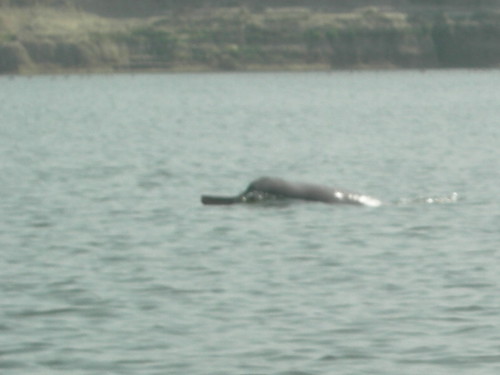
Ganges River Dolphin (known as Soons by locals in India shushuk in Bangladesh) is a subspecies of river dolphins mainly found in Bangladesh, India and Nepal. A similar subspecies the Indus River Dolphin is found in Pakistan. These are found in the Ganges and Brahmaputra Rivers and their tributaries and the Indus River and its tributaries Beas River and Sutlej River. The Ganges river dolphin is recognized by the government of India as its National Aquatic Animal.

These river dolphins have long pointed noses like all river dolphins with their teeth visible in the upper and lower jaws even when the mouth is closed. Adult female dolphins are larger than male dolphins. The species feeds on a variety of shrimp and fish including carp and catfish.

These river dolphins have been adversely affected by the use of the river systems by humans in by polluting them intolerably. Pollution by fertilizers, pesticides and industrial and domestic effluents are responsible for the death of many fishes and dolphin populations. Though they are protected species, they are caught by fishermen and their oil and meat are used as a liniment, as an aphrodisiac and as bait for fishing. Both the subspecies are listed by the IUCN as endangered on the Red List of Threatened Species.

The Vikramshila Gangetic Dolphin Sanctuary in Bhagalpur District of Bihar, India, a 50 km stretch of Ganges River from Sultanganj to Kahalgaon, is the only protected area for the Gangetic dolphins. Now only few hundreds of the river dolphins are remaining and half of Gangetic dolphins found here.

Classified as “endangered” in the 2006 IUCN Red List of Threatened Species & included Schedule-I of the Indian Wildlife Protection Act, 1972, they are among the oldest creatures in the world along with crocodiles, sharks and some turtles.

The Buriganga in Bangladesh, Dhaka's lifeline from times immemorial and where Gangetic dolphins were abundant in the past, is now threatened by pollution and encroachment, with about 80% of Dhaka's sewage flowing into the river untreated. The flow of water in the Buriganga is very low except during the monsoon season, when it is flooded. Here when the water quality is not at its worst, river dolphins can still be sighted.